
- FLEX STORAGE - your energy storage experts

The Role of Energy Storage in Photovoltaic Companies
Energy storage is becoming a key element for industrial photovoltaic installations. A properly sized storage facility is crucial to ensuring the autonomy and security of a company's power supply. Key benefits include:
- Auto-consumption and cost optimization: Surplus PV energy is stored and used during evenings, nights, or during peak grid prices, reducing grid consumption costs. Energy storage enables increased self-consumption of energy produced by photovoltaic panels, maximizing the use of renewable energy sources and reducing dependence on external suppliers.
- Production continuity: In the event of a grid failure, industrial companies (three shifts or continuous production) avoid downtime thanks to a backup warehouse. Energy storage protects against the effects of a power outage, ensuring power security and continuous system operation.
- Demand regulation and network stabilization: Storage helps reduce power peaks (peak shaving), which reduces capacity charges and supports the overall energy flow of the system. Energy storage enables the storage of electricity generated from renewable sources, such as solar PV.
Proper use of the energy storage allows for effective management of the energy produced by photovoltaic panels.
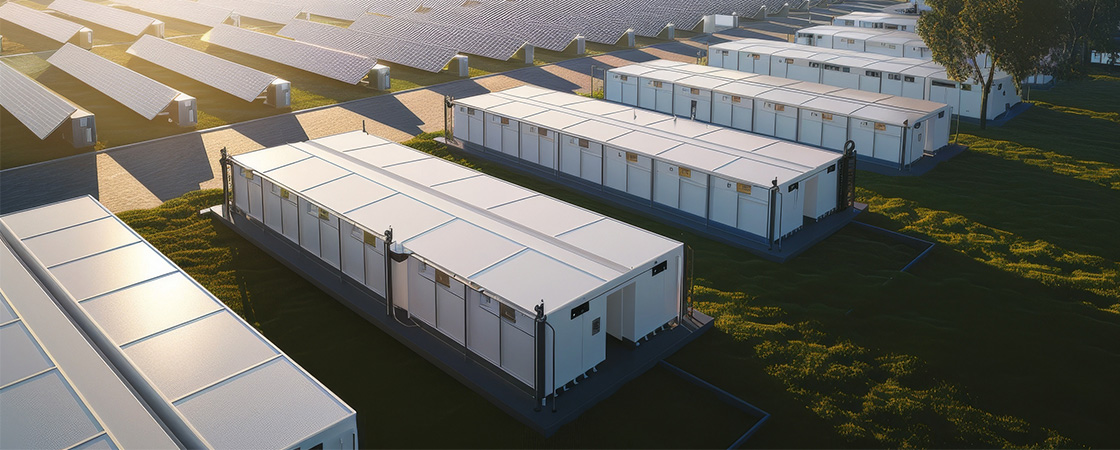
Introduction to Energy Storage
Energy storage is a solution that is gaining increasing popularity among both businesses and households seeking to increase energy independence and optimize energy costs. Modern energy storage facilities allow for the storage of surplus electricity generated by photovoltaic installations or wind turbines, enabling the maximum utilization of solar and wind energy when production exceeds current demand. The stored energy can be used later in the day, for example, in the evening or during power outages, significantly improving power supply security. Energy storage facilities not only allow for the effective management of surplus energy but also for reducing grid consumption, translating into real savings and greater energy independence for companies. This allows businesses to better control their energy consumption and effectively utilize their own renewable energy sources.
Typical energy storage technologies – pros and cons
Three main technologies are most commonly used in industrial installations:
- Lithium-ion batteries (LFP or NMC)
- The most popular (~90% of the market) due to their high efficiency (~90%) and allow for deep discharge.
- Lithium-ion batteries and lithium batteries are currently the most commonly used due to their high efficiency and safety of use, as well as compatibility with photovoltaic panel installations.
- LFP is characterized by greater security and stability.
- The depth of discharge of these batteries affects their long life, allowing full use of their capacity without loss of functionality.
- Easy expansion thanks to modular design and good capacity/power ratio.
- Flow batteries
- Large capacities, long life, lower cycle cost.
- They are ideal for industrial applications, although they are larger and have lower instantaneous power.
- Hybrid solutions
- A combination of lithium and flow batteries allows for efficient energy management – flow batteries cover the base, and lithium batteries provide dynamic support.
- The appropriate charging and discharging process is crucial for maintaining the long life of the system and safe use.
- Energy storage units work with photovoltaic panels, enabling efficient energy storage and increasing energy independence.
Capacity matching and configuration
- The storage capacity should depend on the photovoltaic system's power output and the specific characteristics of the photovoltaic system. It is recommended that the energy storage capacity be approximately 0.8–1.3 times greater than the PV system's power output, depending on the consumption profile and photovoltaic system characteristics. Proper energy storage configuration allows for optimal utilization of energy from the photovoltaic system.
- In plants operating in three-shift mode, a larger energy buffer is required than in home installations, which should be taken into account when selecting a storage facility for a photovoltaic installation.
- Energy storage systems are compatible with various types of photovoltaic installations. DC systems (batteries connected directly to a PV inverter) are effective in new photovoltaic installations. In older photovoltaic installations, AC solutions with a dedicated inverter are used.
Investing in an energy storage system increases the efficiency of photovoltaics and allows for better management of the energy produced by photovoltaics, which translates into greater energy independence and savings.
Energy storage life
One of the key aspects to consider when choosing an energy storage device is its service life. Modern energy storage devices, especially those based on lithium-ion batteries, boast long service lives that can reach up to 20 years. A long service life is the result of high-quality components, appropriate design, and advanced charging and discharging management systems. It's worth remembering that the durability of an energy storage device is also influenced by operating conditions, the frequency of charge and discharge cycles, and regular maintenance. By choosing an energy storage device from a reputable manufacturer, companies can be confident that the investment will last for many years, ensuring stability and energy security.
Warranty and service
When choosing an energy storage device, a warranty and access to professional service are crucial. Renowned energy storage manufacturers offer multi-year warranties on their products, giving users a sense of security and the assurance that their investment is protected against potential failures. High-quality energy storage devices are covered by comprehensive service support, which includes both regular inspections and a rapid response in the event of a failure. This allows companies to count on efficient and effective technical problem resolution, minimizing the risk of downtime and ensuring uninterrupted power supply. Partnering with reputable energy storage suppliers guarantees reliability and long-term satisfaction with the system.
Financing energy storage
Implementing an energy storage system in a company doesn't have to involve a large, one-time expense. There are many attractive financing options available on the market, allowing for flexible allocation of investment costs. Companies can take advantage of loans, leasing, or dedicated subsidy programs, such as the government's "Mój Prąd" program, which offers financial support of up to PLN 23,000 for the purchase and installation of an energy storage system. Additionally, some companies specializing in energy storage offer their own financing systems, allowing customers to implement modern solutions without having to commit significant capital. This makes investing in an energy storage system accessible to a wide range of businesses, and the savings resulting from effective energy management can quickly offset the initial investment.
Applications in various industries
- Photovoltaic farms
– Energy storage can be used to manage energy production from various energy sources, including photovoltaic installations. This allows for production balancing, increased energy efficiency and security, and optimal use of energy from photovoltaic panels. - Poultry farms and mushroom farms
– Energy storage in the warehouse ensures power supply security and protection against power outages. Power stabilization for cooling, ventilation, and night-time processes, and protection against blackouts. - Production plants
– Utilizing an energy storage system allows for effective energy management and grid integration. This allows for savings on peak shaving, ensures the continuity of production processes, and reduces network costs.
Installing an energy storage system is crucial for optimal use of energy from photovoltaic panels.
In summary, an energy storage facility allows you to store energy from various sources, which increases flexibility and energy independence.
Safety and regulations
- Storage systems must meet EU safety standards, fire protection regulations, ventilation, assembly (flex-storage.pl). The safe use of energy storage facilities is ensured by compliance with these standards and regular audits, which guarantees high stability and resistance to weather conditions.
- Professional audits and monitoring are key – for example, Flex Storage performs detailed energy needs analyses before installation and provides service and financing (flex-storage.pl). Professional companies handle all formalities related to energy storage installation, including obtaining permits and subsidies, and handling installation-related formalities also includes contacting the relevant supervisory authorities.
Why it's worth it - benefits summary 🔍
- Finances: lower bills and return on investment thanks to self-consumption, power regulation, intelligent energy management and intelligent storage system management, allowing you to optimize your energy consumption and prepare your business for the future.
- Stability: continuity of operation regardless of the grid condition and long service life of modern energy storage systems.
- Bezpieczeństwo: zgodność z normami, backup energetyczny i ochrona przed blackoutami. Szeroka gama produktów dostępnych na rynku pozwala na dopasowanie rozwiązań do indywidualnych potrzeb.
- Ekologia i wizerunek: the company demonstrates an ecological approach, supports sustainable development and is particularly important for the energy transformation.
Przedstawiona kalkulacja ma charakter orientacyjny i nie stanowi oferty w rozumieniu prawa cywilnego.
After signing the contract, we are available to you at every stage of implementation – from audit, through installation, to service and post-installation support.
Fill out the contact form to receive a personalized offer tailored to your needs.
How to start?
- Energy audit – assessment of demand, consumption profile, continuity needs; the specialist will select the best solution tailored to the company's needs.
- Selection of technology – conversion of capacity, battery type, DC/AC configuration; a wide range of products available on the market allows for individual adjustment of the system.
- Design and assembly – system selection (modular, container), installation and integration.
- Monitoring and service – ensuring durability, safety and efficiency.
- Funding – subsidy support (government and EU programs), assistance in completing formalities related to obtaining subsidies (flex-storage.pl).
Summary
For industrial companies, energy storage in photovoltaic installations is no longer a luxury, but a strategic investment. They translate into real savings, increased energy independence, production continuity, and a significant contribution to the company's environmental image. Energy storage allows for the efficient management of electricity produced by photovoltaics, translating into savings and energy independence. Thanks to audits, professional design, and formal and financial support, the implementation of such a solution can be efficient and beneficial.
Want to delve deeper into the topic or are interested in a specific case study? Request a free consultation and talk to an expert about which energy storage solutions might be right for your company.
- FREE CONSULTATION
