
- FLEX STORAGE - your energy storage experts

Energy storage in a mushroom farm – an investment that pays off
Mushroom farm owners know perfectly well that stable growing conditions are the foundation of success. Temperature, humidity, ventilation – everything must operate continuously and without interruption. Building a mushroom farm is a process that requires experience and knowledge of specific technical and environmental requirements, which must be met to ensure optimal production conditions. A modern mushroom farm should be equipped with a sufficiently large hall (e.g., over 1,000 m²), packaging warehouses, cold stores, and dedicated rooms for storing compost and machinery. The systematic use of appropriate procedures and tools in the mushroom farm is also crucial, ensuring high production quality and minimizing the risk of disease. Maintaining hygiene is crucial in mushroom cultivation, including regular disinfection of equipment, employee workwear, and the tightness of the hall to prevent the development of diseases such as green mold. The mushroom is one of the most important mushrooms cultivated in Poland and Europe, and Polish mushrooms are exported to markets worldwide, including other European countries.
What if your mushroom farm suddenly loses power? In such situations, an energy storage system becomes an invaluable support system, designed to ensure continuous mushroom production, safety, and a stable microclimate in the growing chambers. Microclimate is a key aspect of mushroom farm management, and environmental parameters such as temperature, humidity, and CO2 levels are constantly monitored and adjusted to ensure the highest quality crops. Monitoring air parameters such as temperature, humidity, and CO2 is crucial, as well as controlling the substrate and substrate, which directly impact mushroom growth. Proper electricity management is crucial to maintaining optimal air parameters, which directly impact mushroom growth.
Requirements for infrastructure and energy systems are becoming increasingly stringent, so it's worth considering hybrid installations that combine energy storage with photovoltaics – more and more farmers have invested in such solutions to increase efficiency and independence. Investments in photovoltaics and energy storage are profitable due to the wide range of applications and the efficient use of renewable energy. When building a mushroom farm, it's also important to ensure two independent power sources, which minimizes the risk of power outages and protects the production process. Adequate power supply capacity must be verified and ensured to ensure uninterrupted operation of climate control and automation systems. Materials with the highest insulation parameters, resistant to high humidity and corrosion, are required, given the specific conditions in a mushroom farm.
In recent years, farmers have increasingly utilized subsidies for installing energy storage and photovoltaic systems on farms, which allows for lower investment costs. Subsidies are also available for farmers, and expenses incurred under these support programs may be eligible. For example, an energy storage system allows for watering and maintaining the appropriate microclimate on each shelf in growing chambers, which translates into high-quality crops and greater agricultural productivity. The mushroom harvest cycle typically lasts six weeks, and effective harvesting requires appropriate machinery and trained growers.
Energy storage technology and its use in mushroom farms have a wide range of applications, and the technical requirements depend on the specific facility. The rules for using energy storage and photovoltaics continue to evolve with technological advancements and regulatory changes, so implementing modern solutions requires knowledge of current regulations and laws. Due to rising energy costs and changing market conditions, grid independence is becoming increasingly desirable. It's worth noting that those who want to increase the efficiency and independence of their farms have invested in energy storage and photovoltaics. Trends and technologies in energy management in mushroom farms are also evolving, opening up new opportunities for investors and producers. Choosing the right infrastructure and technology is crucial for the future development of mushroom farms, and access to municipal water and sewage systems and the power grid plays a significant role in ensuring reliable power supply. In the case of investment and development of mushroom farms, the lack of significant space constraints allows for facility expansion and increased mushroom cultivation efficiency.
Introduction to mushroom production
Mushroom cultivation is one of the most advanced and profitable segments of modern agriculture. Mushroom production requires not only specialized knowledge but also precise management of environmental conditions. Proper temperature, humidity, and efficient ventilation systems are crucial, providing optimal conditions for mushroom growth. High-quality mushroom farm equipment, such as modern growing chambers, air conditioning and ventilation systems, and reliable electricity sources, are the foundation for efficient mushroom production. In Poland, one of the world's leading mushroom producers, demand for mushrooms with the highest quality parameters is growing. Therefore, investment in appropriate systems and technologies is essential to meet market demands and ensure year-round production stability.
Location and construction of mushroom farms – impact on energy needs
Choosing a location and building a mushroom farm are decisions that directly impact the facility's future energy needs. Availability of electricity, water, and sewage systems should be considered, which helps avoid costly infrastructure investments. A mushroom farm's location near major roads is also crucial, facilitating compost transport and the collection of fresh mushrooms. Consideration should be given to locating it in industrial zones, which often offer favorable tax conditions and ready-made technical infrastructure. The construction of a mushroom farm should be planned with future energy needs in mind, taking into account both current energy consumption and the potential for expanding power systems as production expands. Proper site and infrastructure preparation is the foundation for effective energy management and minimizing long-term operating costs.
Mushroom farm equipment and energy efficiency
Modern mushroom farm equipment is key to achieving high energy efficiency and optimal conditions for mushroom growth. When choosing equipment, it's important to choose energy-efficient systems that maintain stable temperatures and humidity in the growing chambers. Advanced air conditioning and ventilation systems are particularly important, ensuring uniform air distribution and effective removal of excess moisture. Investing in modern technologies, such as microclimate control systems, enables remote monitoring and precise management of conditions in the mushroom farm, resulting in improved quality and higher yields. Efficient irrigation systems allow for efficient water management while providing optimal conditions for mushroom growth. Properly equipped mushroom farms not only reduce energy costs but also increase competitiveness in the mushroom production market.
Introduction to energy storage
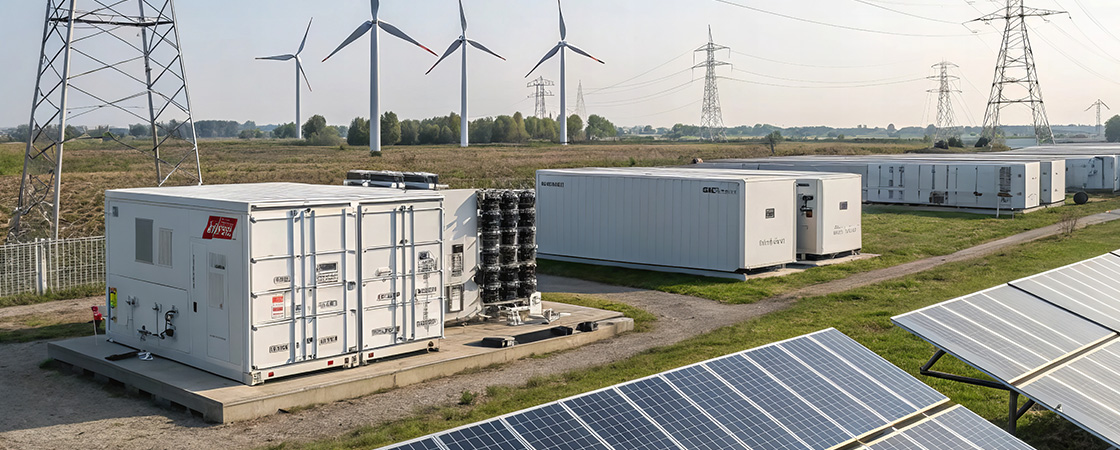
With the rapid development of renewable energy sources, such as photovoltaics, energy storage systems are becoming an indispensable element of modern power systems. Their role in the context of farms, and especially mushroom farms, is constantly growing. Energy storage systems enable efficient management of electricity production and consumption, enabling the storage of surpluses produced on sunny days and their use when demand is highest. This allows farmers to ensure a continuous electricity supply, regardless of weather conditions or temporary grid interruptions. Energy storage systems can power not only air conditioning and ventilation systems but also machinery used in the daily operation of mushroom farms. This solution not only increases production security but also allows for better utilization of the potential of the farm's own photovoltaics and independence from fluctuating energy prices.
Types of energy storage
Choosing the right energy storage system is a key decision for any farm looking to optimize its electricity consumption. Various storage technologies are available on the market – from popular lithium-ion batteries, through mechanical energy storage systems, to heat pump-based solutions. Each type of energy storage system has its own specific advantages and is best suited for specific applications. For example, lithium-ion batteries are ideal for households and smaller mushroom farms, where quick access to stored energy is essential. Larger farms or businesses, on the other hand, can opt for more advanced systems that support grid stabilization and allow for the storage of larger amounts of energy. When choosing a technology, it's important to consider both the installation's characteristics and the farm's individual needs – from daily power to support for transportation or larger-scale energy production. Particularly in the case of mushroom farms, the power requirements of the machines used on the site must be considered, which influences the selection of the appropriate energy storage system.
For a mushroom farm dependent on continuous operation of systems (air conditioning, ventilation, irrigation), the ratio 1:2, 1:3 or 1:4 is more appropriate than 1:1 because:
- Allows for several hours of power backup
- Provides greater time flexibility in the event of a network outage
Why is this important?
- 1:1 → short cycles, fast charging and discharging (e.g. network services, peak shaving)
- 1:2, 1:3, 1:4 → longer power supply, e.g. for industrial plants, mushroom farms
Why do mushroom farms need electricity storage?
The question of how to ensure the continuity of production in a mushroom farm is becoming increasingly relevant, especially in the context of growing technological requirements and energy security.
A mushroom farm is a facility that operates 24 hours a day. Even a short power outage can lead to significant losses, and in extreme cases, the loss of an entire batch of crops. Air conditioning and automation systems are unforgiving. Therefore, a growing number of mushroom producers are choosing to implement energy storage systems that allow:
- maintain production even during a network failure, taking into account various considerations such as reliability and cost,
- use solar energy effectively – the key here is the maximum use of energy storage to ensure power supply stability and consumption optimization,
- optimize electricity consumption costs by analysing the ratio of investment costs incurred to the benefits obtained from energy storage,
- relieve generators and emergency systems.
It's worth emphasizing that energy storage systems in mushroom farms must meet specific technical requirements to ensure proper growing conditions and safe operations. An advanced microclimate control system plays a key role here, enabling monitoring and control of temperature, humidity, and CO2 levels within the farm. Energy storage systems have a wide range of applications – they are suitable for both farm buildings and large production facilities. Trends in energy storage are changing dynamically with technological advancements and growing market expectations. Optimizing the mushroom cultivation process is possible through the integration of energy storage systems with modern management systems, which translates into higher yields and higher crop quality.
Real-life example: a mushroom farm with an energy storage facility
In one of the mushroom farms we cooperated with as FLEX STORAGE, the owner decided to invest in an energy storage facility after a thorough risk analysis. It's worth noting that mushroom farm owners who previously invested in photovoltaics are now increasingly using energy storage facilities to optimize the use of produced energy. What prompted this decision?
- Frequent power outages disrupted air conditioning and ventilation systems.
- Energy prices rose month by month.
- Emergency generators were expensive to operate and did not operate quickly enough.
- The photovoltaic installation, a key element of the system, produced surpluses which, without storage, were fed back into the grid – without any significant profit.
- It was possible to obtain a subsidy for the purchase of an energy storage facility, which allowed for the coverage of part of the eligible expenses under support programs.
The energy storage facility was designed to ensure production continuity and efficient energy use in the daily operation of the mushroom farm. Thanks to the energy storage facility, the cold store in the mushroom farm can operate continuously, preserving the freshness of harvested mushrooms. It's important to understand the rules for calculating energy from the storage facility and photovoltaics, which influence the profitability of the investment. Is investing in an energy storage facility cost-effective? When analyzing the benefits, it's important to consider the favorable cost-to-savings ratio and the effective practical use of the energy storage facility.
The result? Today, the mushroom farm operates stably and independently, and energy costs are noticeably lower. However, market conditions and regulations are changing, so investment decisions must consider various factors that may impact the ultimate profitability of the project.
What do you gain from energy storage in mushroom production?
- Production safety – energy is available even in the event of a grid failure, which guarantees uninterrupted operation of systems during mushroom harvesting and minimizes the risk of losses.
- Lower bills – you can use cheaper energy stored at night or from your own photovoltaics, which allows you to effectively use the stored energy at different times of the day.
- Consistent crop quality – no climate fluctuations mean better yields.
- Sustainable development – the energy storage facility is a step towards ecology and CSR standards.
- Wide range of applications – energy storage in mushroom farms can be used to power air conditioning systems, lighting or heating devices, which highlights their versatility.
- Meeting technical requirements – modern energy storage facilities must meet specific requirements to ensure proper functioning and safety of the installation.
What are you risking if you don't invest?
The question of whether an energy storage facility is affordable is crucial for every mushroom farm owner. The lack of an energy storage facility presents significant challenges that must be considered, taking into account various factors, such as costs, risks, and the ratio of costs incurred to potential losses. It's important to remember that safety and energy management regulations require meeting specific technical and formal requirements when installing an energy storage facility. Market conditions and regulations change dynamically, impacting investment risk and the profitability of such solutions. Furthermore, maintenance and repair costs associated with the lack of an energy storage facility can significantly burden the farm's budget. The lack of an energy storage facility and power outages can also promote the development of crop diseases, such as green mold, due to poor hygiene conditions.
- Crop loss in the event of a power outage.
- Lack of control over energy costs.
- Untapped potential of PV installations.
- Rising costs of services and generators in the long term.
Managing a mushroom farm with energy storage
Effective mushroom farm management using an energy storage system guarantees production continuity even in the event of unforeseen power outages. Choosing the right energy storage system allows for the accumulation of surplus energy and its use during peak demand or grid failures. Integrating the energy storage system with renewable sources, such as photovoltaic systems or wind turbines, should also be considered, further increasing the farm's energy independence. This allows farm owners to not only protect themselves against losses resulting from power outages but also optimize operating costs and better manage energy consumption. Modern energy storage systems are easy to use and allow for flexible adaptation to individual production needs, making them invaluable support in the daily management of a mushroom farm.
The development of mushroom farms and investments in modern technologies
The dynamic development of mushroom farms is inextricably linked to investments in modern technologies that increase production efficiency and effectiveness. Consideration should be given to implementing energy-saving solutions that provide optimal conditions for mushroom growth and enable remote monitoring and control of the microclimate in growing chambers. Key technologies include advanced microclimate control systems, intelligent irrigation systems, and modern energy storage systems. Automation and the use of artificial intelligence are also playing an increasingly important role, enabling precise management of production processes and rapid response to changing conditions. Investments in innovative technologies are not only a way to increase yield and crop quality but also to reduce energy costs and improve the competitiveness of mushroom farms in both domestic and international markets.
Energy challenges for mushroom farms.
External threats:
- Increase in electricity prices,
- Changes in energy regulations, which are changing dynamically and require constant monitoring,
- Network failures, especially during the summer, when energy consumption is highest and the risk of power outages increases significantly,
- Extreme weather phenomena,
- High technical and formal requirements regarding energy infrastructure,
- The need to meet energy security rules,
- Challenges associated with transporting energy to and from the mushroom farm.
Internal threats:
- Old electrical installation that does not meet current requirements,
- Lack of modern automation and energy management technologies,
- Dependence on a single energy source without taking into account various factors, such as costs, reliability or the ratio of investment costs to potential losses,
- Inefficient emergency systems,
- Expenditures on modernization of energy systems, which may be necessary for the effective use of modern solutions.
Summary: an investment that pays off
For mushroom farms, reliable power isn't a luxury—it's the foundation of production. A mushroom farm's production cycle typically lasts six weeks, so reliable power throughout this period is crucial to profitability. Investing in an energy storage facility not only provides security but also real savings and a competitive advantage. It's worth remembering the wide range of applications for energy storage and the role of modern technology in efficient energy management and utilization. Our experience at FLEX STORAGE shows that such solutions work—not just in theory, but in practice, every day.
Don't wait for the power to go out. Take care of the future of your mushroom farm today.
- FREE CONSULTATION
